
Your inheritance. Let’s keep it yours!
TL;DR A Texas court case hinged on whether North Carolina land given to a wife by her parents was a gift (her separate property) or marital property. Although the deed mentioned a nominal payment, the court found the evidence, including the parent-to-child transfer and the claim of gift, was clear and convincing enough to prove it was the wife’s separate property. Contact us today for a consultation and let us help you resolve your inheritance challenges. Explore our website for more information and resources on inheritance disputes.
Did Your Parents’ Gift End Up in a Legal Fight? The Secret to Proving a Texas Gift
Imagine your parents give you a piece of land or a big item to help you get started in life. Sweet, right? It feels like it’s yours, but in the eyes of the law, that gift can become a massive headache if you ever have to prove it was truly just for you. This is exactly what happened in a recent Texas case, and it shows why you need to know the rules of Proving a Texas Gift.
The North Carolina Property Question
In a case involving Donald and Veda Miles, a major issue centered on some land in North Carolina. Veda’s parents transferred the property to her shortly after she married Donald. Veda testified the land was a gift from her parents, which, under Texas law, would make it her separate property—meaning it wouldn’t be subject to division. Donald, however, disagreed. He argued it should be considered marital property.
So, who wins? Texas law has a handy rule called the “presumption of gift” that comes into play when a parent transfers property to a child. This creates a strong starting point for the child claiming the property as a gift.
The Problem and What the Court Looked At
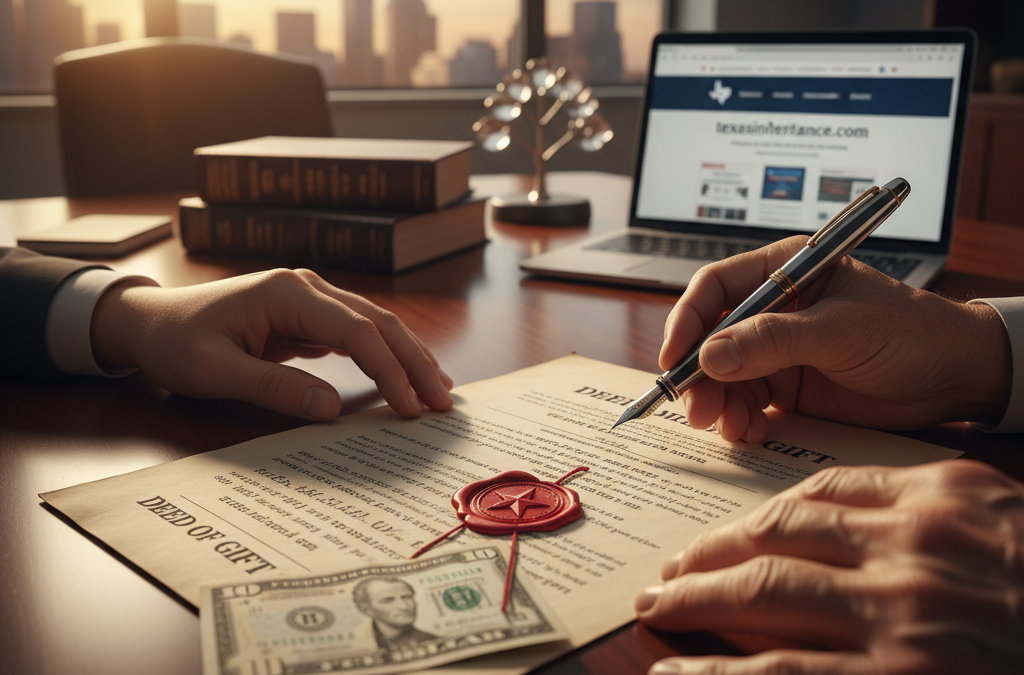
Here’s where it gets complicated: the deed for the North Carolina property mentioned a consideration of . Donald argued that mentioning any “consideration” (payment) meant it couldn’t have been a gift. The court, however, pointed out that nominal consideration like is often customary in a deed of gift and does not automatically mean it wasn’t a gift.
To successfully claim property as a gift and prove it’s separate property in Texas, a person must present “clear and convincing evidence”. That’s a high bar! The trial court decided Veda met this standard by showing several things:
- She claimed it was a gift from her parents.
- The deeds were delivered close to the start of the marriage.
- The deed recited only nominal consideration (the ), common for gifts.
- Donald’s own statements in court indicated he might acknowledge Veda’s superior rights to the property.
The court ultimately agreed with Veda and affirmed that the North Carolina property was her separate property.
How to Protect Your Gift: What Went Right and Wrong
The good news is that Veda ultimately won and was successful in Proving a Texas Gift. What went right was the presence of the parent-child transfer, which created the initial presumption of a gift.
What could have been better? A simple document! To prevent this kind of legal fight, parents making a gift should take two easy steps:
- Skip the $10: The deed of conveyance should clearly state the consideration is “love and affection” or “as a gift” instead of even a nominal monetary amount.
- Create a Gift Affidavit: The parents could sign a separate document, an affidavit, that explicitly states they are giving the property as a gift to their child, that they expect nothing in return, and that they intend for it to be their child’s separate property.
A little extra documentation at the time of the gift can save thousands of dollars and huge headaches down the road. If you have been gifted property, check your paperwork now to be sure you can easily prove it’s yours!
See these posts for more information on gift deeds in Texas:
Share this post
If you found this information helpful, please share this post with others dealing with similar probate issues. Have questions or personal experiences with will disputes? If you’re facing a legal battle over the validity of a will, consider consulting with a legal professional specializing in probate litigation to ensure your rights are protected.